

It's tomorrow. You have the job posting open, three interview guides in other tabs, and a growing list of questions you might get asked.
Give the next 45 minutes a specific job: choose what this role needs, find examples from your experience, practise answering aloud and improve one answer.
This plan focuses on the conversation about your experience and fit. If the employer has given you a coding task, case exercise, presentation or other assessment, reserve time for those instructions as well.
Your next 45 minutes, with a purpose
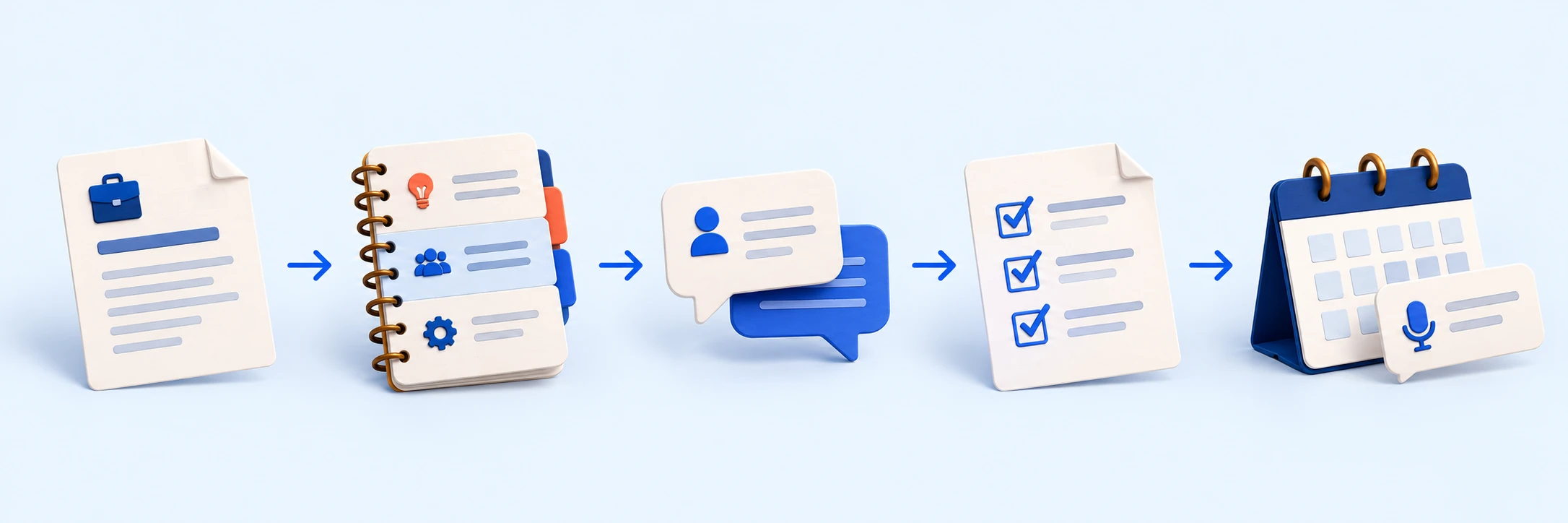
Minutes 0–5: choose three things the role needs
Read the job posting and write down three responsibilities or skills you expect to discuss. Use the employer's words where they help you understand the task.
For a customer support role, your notes might be:
- Explain a solution clearly.
- Handle a frustrated customer.
- Keep accurate records while working through requests.
The British Council's interview guide recommends linking examples of your work to the skills in the job description. Use that as the starting point for this session. British Council
Leave this block with: three things you want your answers to demonstrate.
Minutes 5–15: find three real examples
Choose one experience for each of those points. It might come from a job, a project, volunteering or another relevant responsibility.
Write short notes about what happened, what you did and how it ended. Include a detail that helps explain your decision.
For the customer support example:
A customer had misunderstood the collection date. I checked the order, explained the available options and confirmed the arrangement in writing. The customer chose a later collection, and the next person on shift could see what we had agreed.
That gives you several directions to practise: explaining a problem, handling a difficult conversation and keeping a useful record.
Leave this block with: three story outlines you can talk through.
Minutes 15–25: answer three questions out loud
Use these prompts:
- "Tell me about yourself and why this role interests you."
- "Tell me about a time you handled a difficult situation."
- "What experience would help you do this job?"
For the introduction, connect your current situation, relevant experience and reason for applying. For the other answers, choose a story that fits the question and explain your part in it.
You can record yourself, practise with a friend or use an interview practice tool. Keep the focus on saying the answer. Note where you drift away from the question, skip an important detail or struggle to finish.
Leave this block with: one answer that needs another attempt.
Minutes 25–40: improve that answer and try a follow-up
Choose the biggest gap you heard.
| What happened in your practice answer | What to change on the next attempt |
|---|---|
| The setup took most of the answer | Give the situation in a sentence, then explain your action |
| You kept saying "we" | Add what you personally decided or did |
| The story stopped after the action | Explain what happened afterward or what you learned |
| The answer barely connected to the role | Choose a more relevant example or explain the connection |
Answer again, then add a follow-up: "Why did you choose that approach?" or "What would you do differently?"
Interview Coach can help with this part. Share the role and job context to get focused questions, review your practice feedback and take another attempt at the answer you want to strengthen.
Start practising free if you want to use it for this session.
Leave this block with: a revised answer and a clearer explanation of your decision.
Minutes 40–45: close the practical gaps
Check the interview time and time zone. Find the meeting link or plan your route. For a video interview, test your microphone and camera.
Write two questions you actually want answered. For example:
- "What would you want the person in this role to accomplish first?"
- "What does a typical busy day look like for this team?"
Put your notes somewhere you can find them tomorrow. Read through the three role requirements once more, then finish the session.
Your 45-minute output: three role priorities, three story outlines, one answer you've improved and the practical details checked. Tomorrow, you have something specific to come back to.